Designing a Scalable, Guest-First Hospitality System in a Saturated Market
Context: Owner-operator of two short-term rental properties in Joshua Tree, CA
Duration: 5+ years
Scope: Market analysis · Experience design · Operations · Automation · Scaling systems
The Starting Problem
I entered a highly saturated Joshua Tree short-term rental market where many competitors differentiated through capital-heavy advantages: larger footprints, pools, and aggressive pricing.
I did not have those advantages.
Constraints:
Solo operator
Limited capital
Remote operation
High risk of experience degradation with scale
The core question:
How do you build a hospitality business that can scale beyond a single property without sacrificing guest experience when you can’t compete on size, luxury, or staffing?
Decision 1: Compete on Experience, Not Asset Size
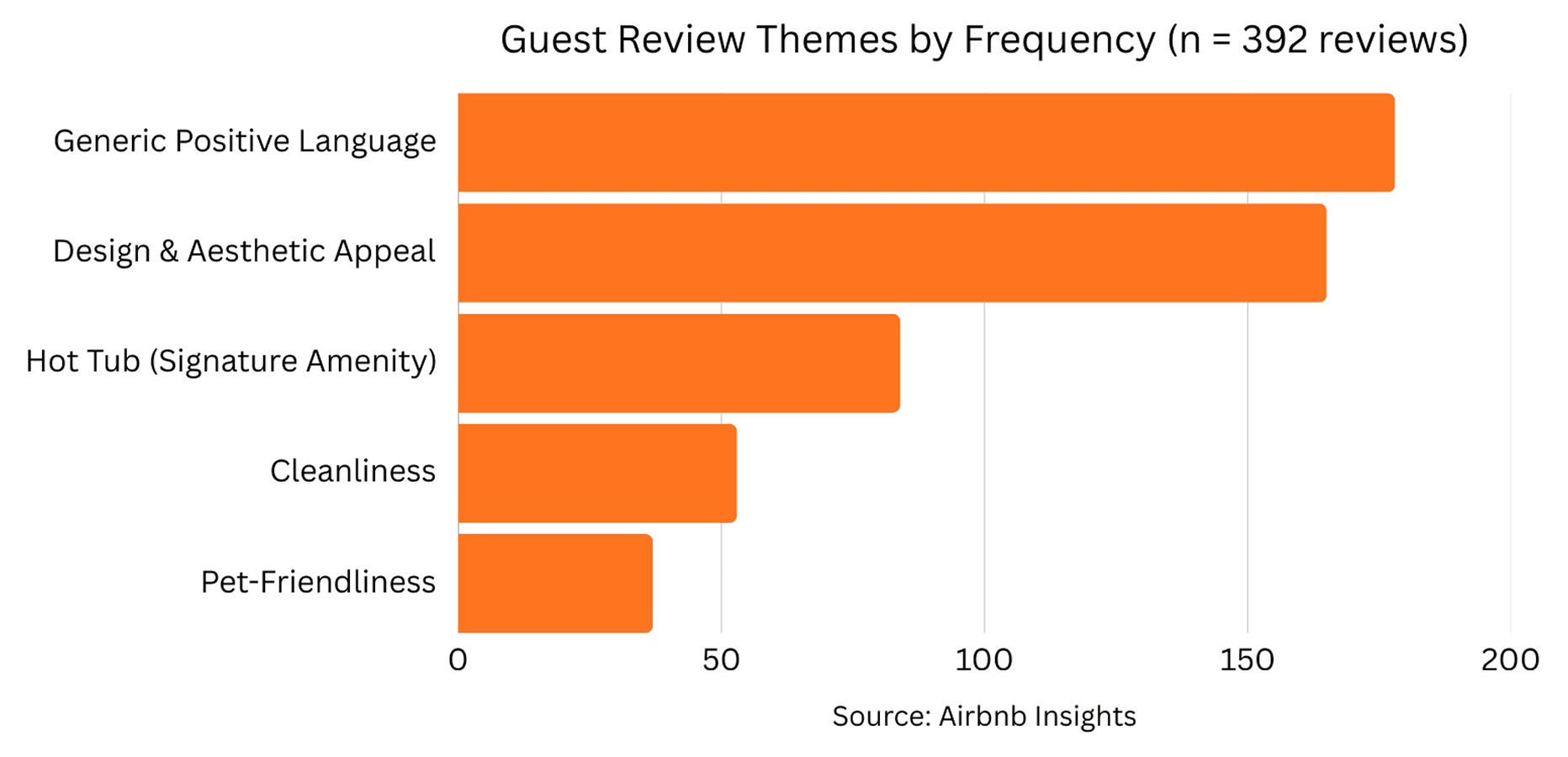
Rather than rely on intuition, I analyzed 392 guest reviews to identify what guests consistently valued.
Signal
Keyword frequency and sentiment clustered around:
Design and aesthetic appeal
Signature amenities
Cleanliness
Pet-friendliness
Notably absent:
Property size
Luxury finishes
Square footage
Guest Review Theme Frequency
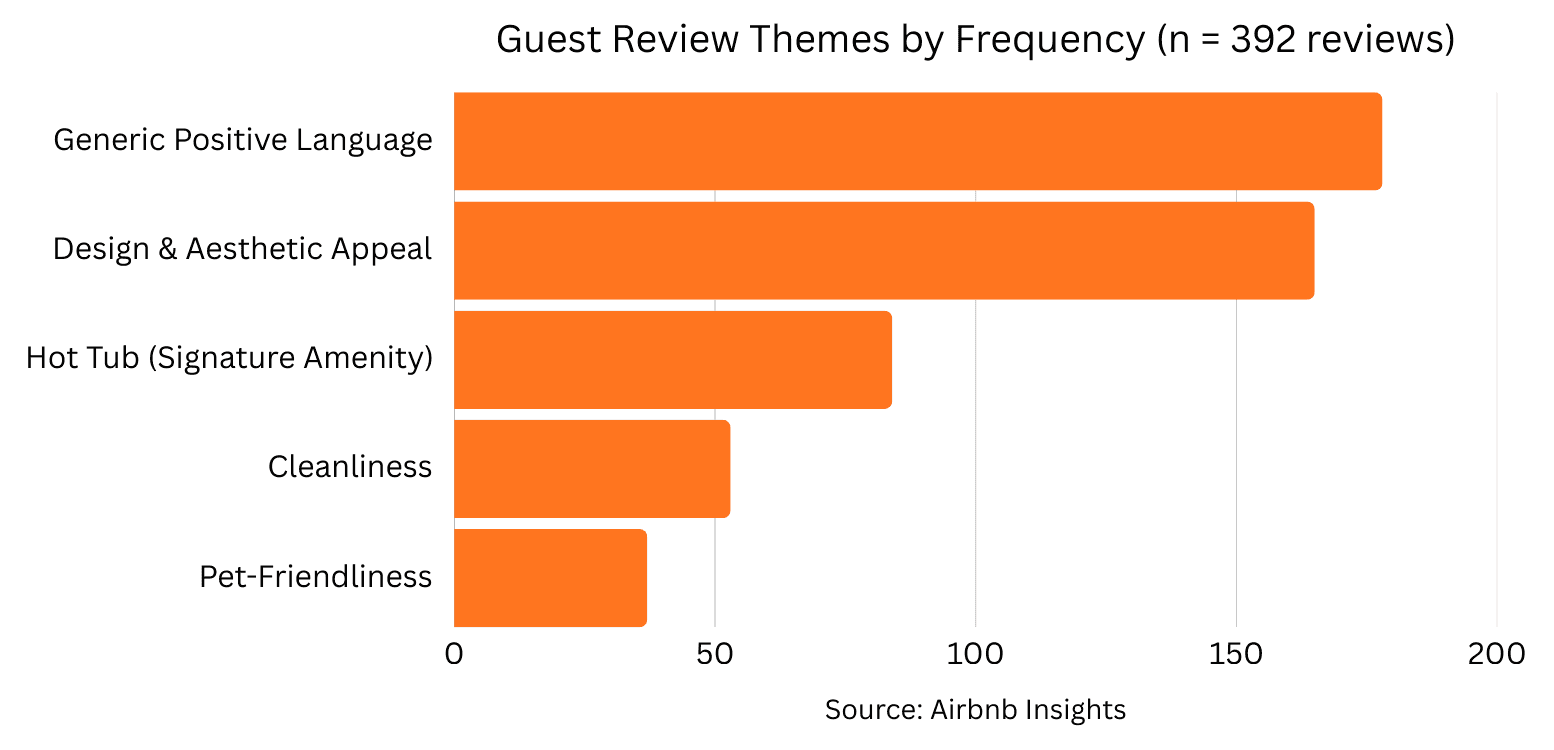
A frequency analysis of recurring review themes across 392 guest reviews. Design and aesthetic language rivals generic positive sentiment, while specific experiential elements (hot tub, pet-friendliness, cleanliness) appear far more often than asset-related factors like size or luxury.
Decision
Compete on character and experience, not square footage or capital-intensive upgrades.
This reframed the problem from “how do I upgrade the asset?” to
“how do I design a repeatable experience guests actually care about?”
Decision 2: Treat Experience Quality as a System, Not a Property Trait
If experience quality depended on individual property quirks, scaling would degrade outcomes.
Action
I standardized experience fundamentals across properties:
Cleaning standards
Guest communication playbooks
Amenity setup and maintenance
Visual identity and aesthetic consistency
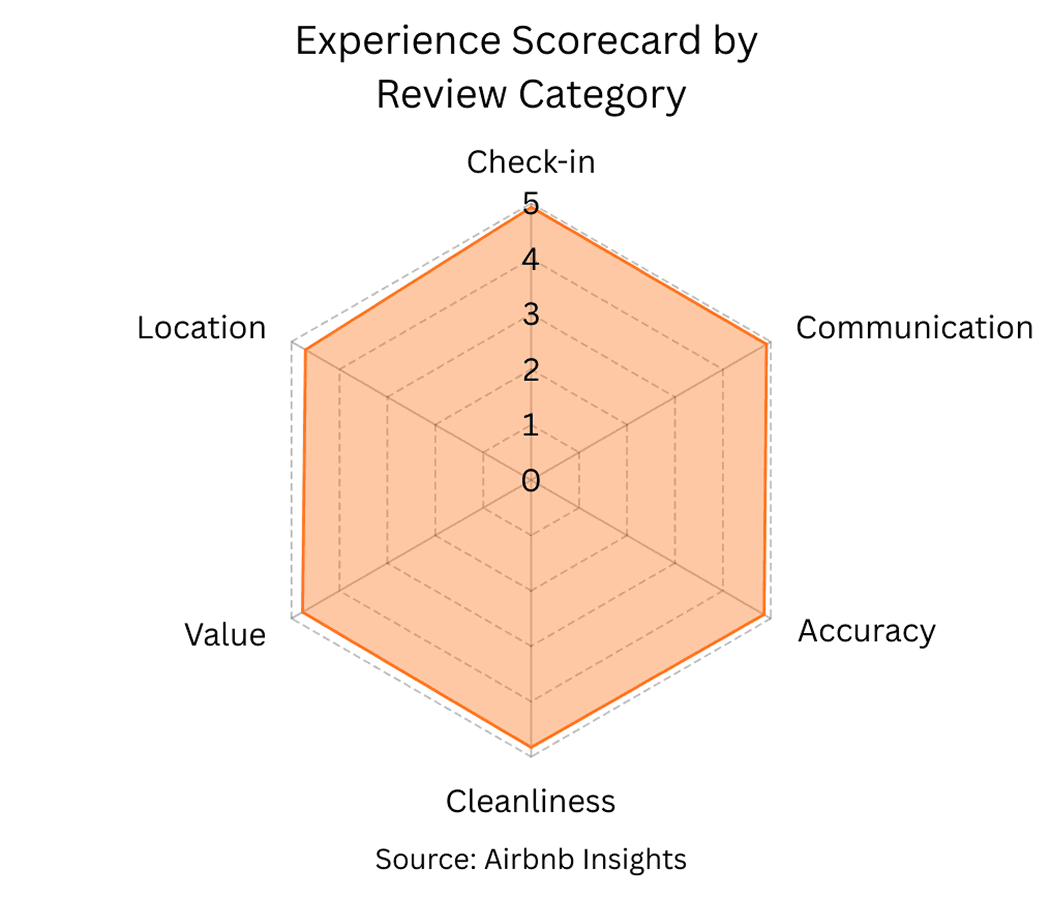
Experience Scorecard
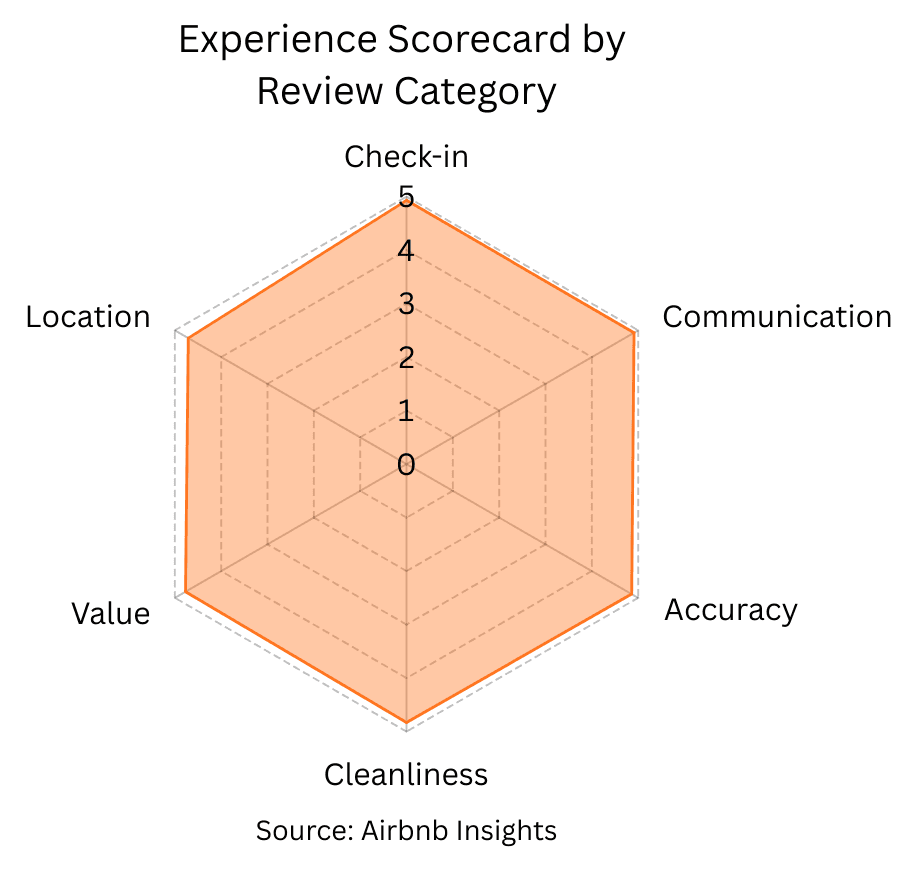
Aggregate review scores across core experience dimensions (check-in, communication, cleanliness, accuracy, value, location). The absence of sharp peaks or valleys indicates a deliberately balanced experience design rather than over-optimization of any single metric.
Result
Despite differences in size, layout, and location, both properties achieved near-identical performance across all review categories.
Insight
Experience quality was being driven by systems, not assets.
Decision 3: Make Explicit Strategic Bets Based on Guest Signals
Once experience was treated as a system, I made targeted investments where guest signal density was highest.
Bet: Design Over Size
~40% of reviews referenced aesthetic or design language
Investment focused on visual identity (e.g., Desert Blush concept)
Outcome:
Design became a primary differentiator without requiring capital-intensive expansion.
Bet: Signature Amenities Over Optional Luxuries
“Hot tub” referenced in 80+ reviews
~$4K install + ~$200/month operating cost
Outcome:
Paid back within the first year through increased booking velocity and pricing power.
Bet: Automation Over Trust
Smart HVAC and hot tub controls implemented
Reduced reliance on guest compliance
Outcome:
Lower operational variance, more predictable costs, reduced manual oversight.
Bet: Pet-Friendly Positioning
~⅓ of guests traveled with pets
Only ~2–3% of local listings allowed pets
No pet fee to reduce booking friction
Outcome:
Higher booking conversion, fewer disputes, and clear differentiation in a constrained supply market.
Decision 4: Prove the System Under Scale
To validate that this operating model could scale without degrading quality, I intentionally delayed expansion.
Action
Property 2 launched only after:
Cleaning standards were locked
Automation was in place
Guest communication playbooks were established
The same operating model was applied with minimal customization.
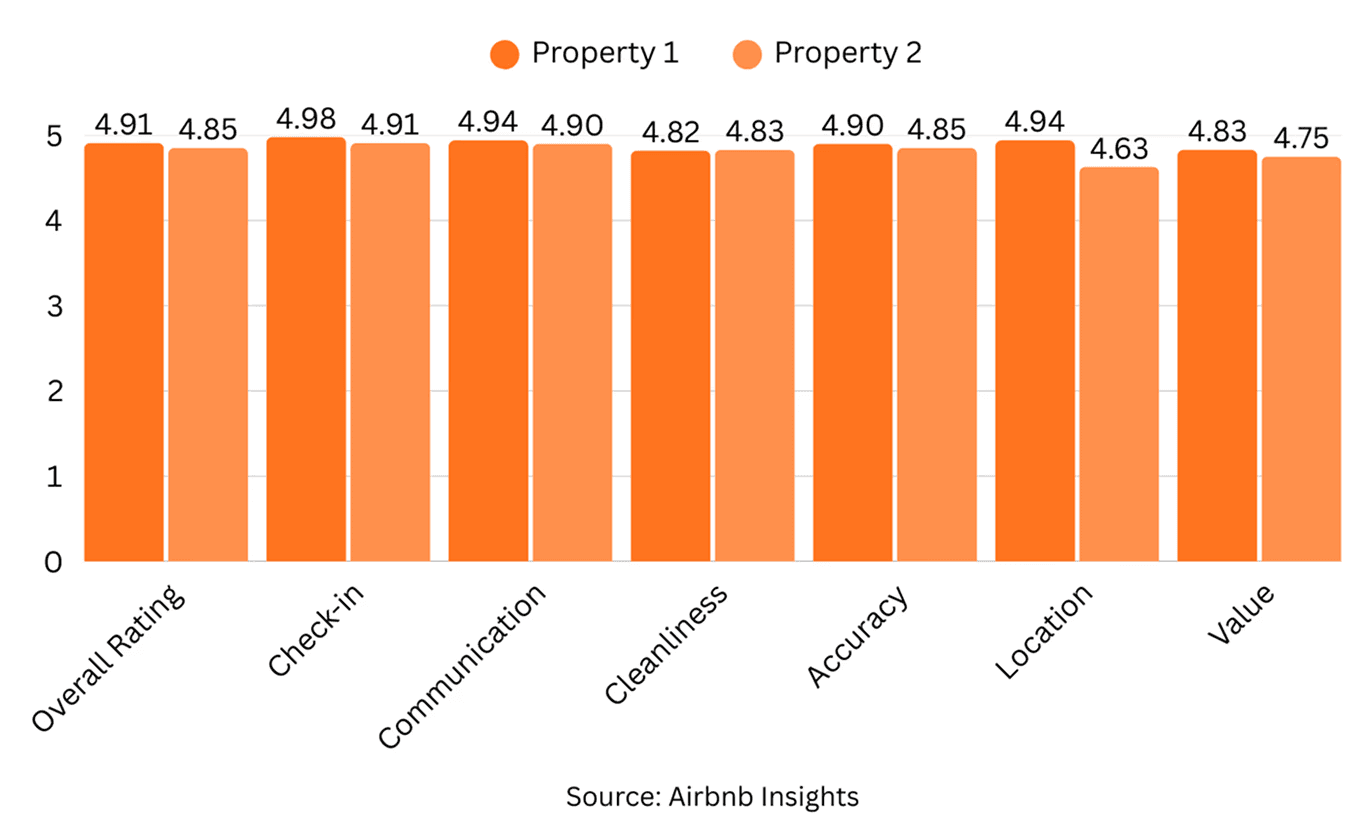
Property Comparison Scorecard
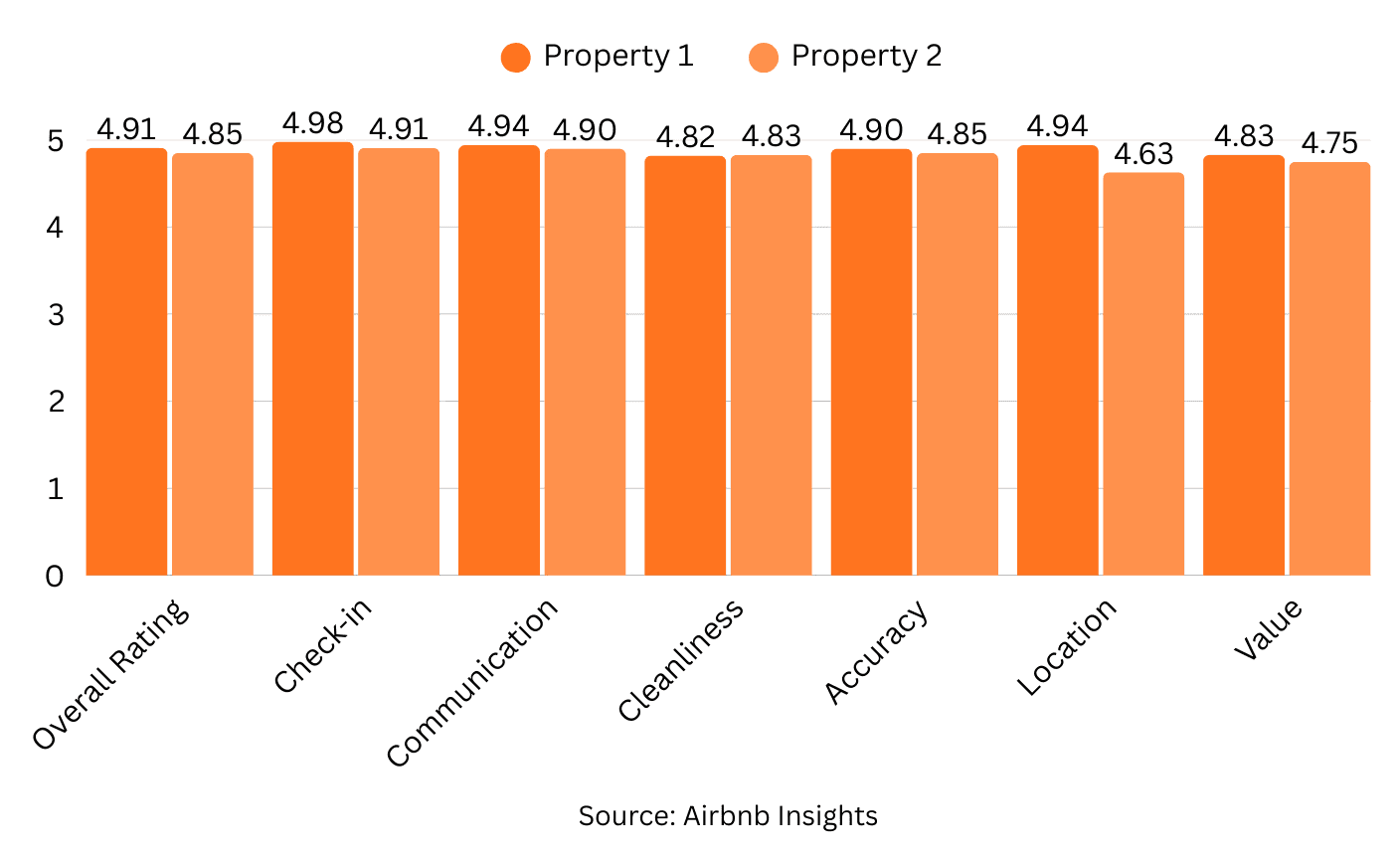
Side-by-side comparison of average review scores across all experience dimensions for both properties. Near-identical performance confirms that outcomes were driven by repeatable systems rather than location or asset-specific advantages.
Result
Property 2 achieved Superhost status
Review metrics closely mirrored Property 1
No degradation across cleanliness, communication, or overall satisfaction
This confirmed the model was repeatable and resilient, not founder- or asset-dependent.
Results
685+ total reviews across two properties
4.8+ overall rating sustained at scale
Superhost status achieved on both listings
Consistent performance across all experience dimensions
Second property launched without operational degradation
Bottom line:
A guest-first, system-driven strategy enabled durable differentiation and scalable quality in a saturated market—despite capital and operational constraints.